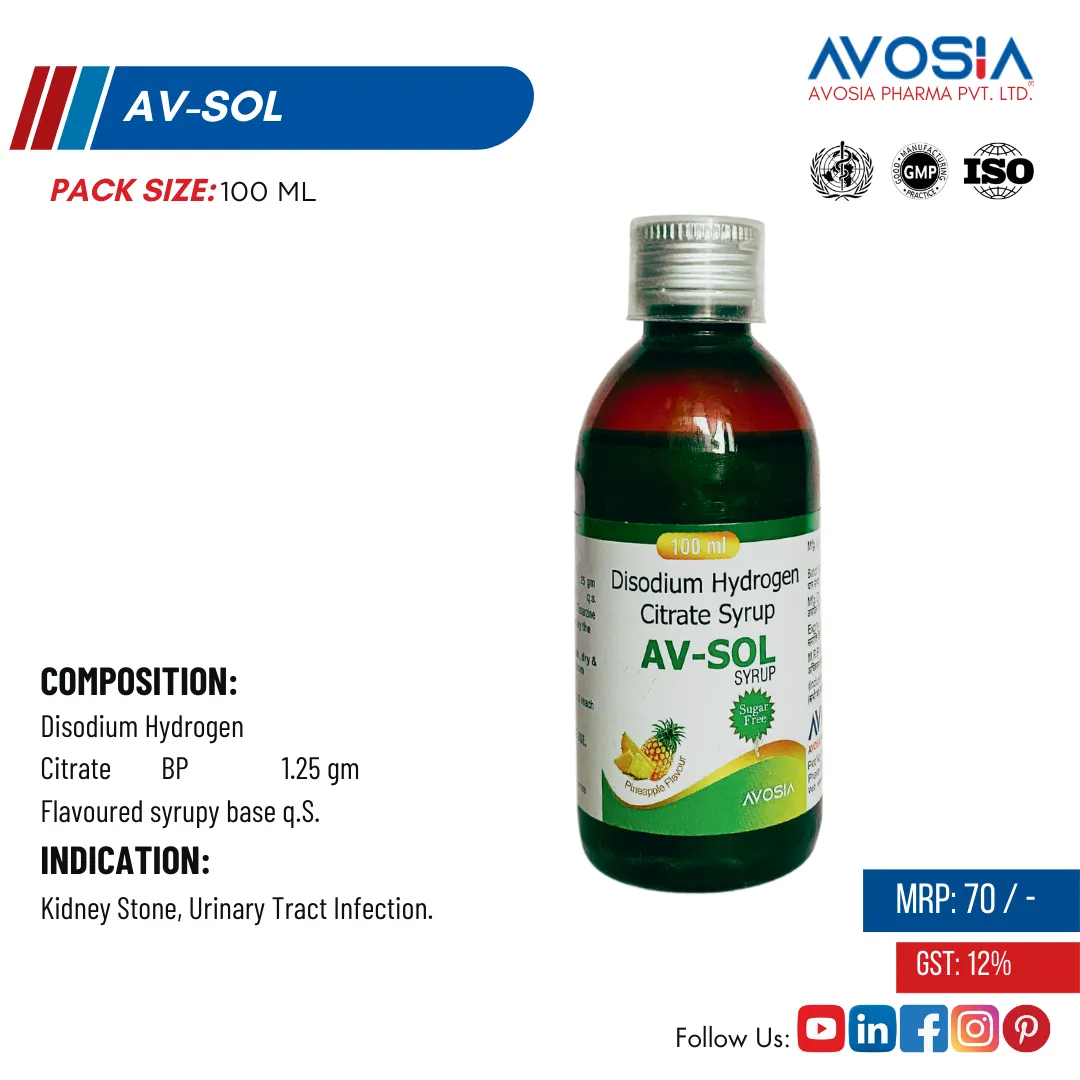
Disodium Hydrogen Citrate Syrup
Disodium Hydrogen Citrate Syrup is a clinically formulated syrup used to manage electrolyte imbalance and correct urinary pH. It helps neutralize excess acid in the body and promotes better metabolic balance. This syrup is widely recommended in cases of acidosis, kidney disorders, and when there is a need to maintain balanced body chemistry.
What is Disodium Hydrogen Citrate Syrup?
Disodium Hydrogen Citrate Syrup is a balanced solution containing disodium hydrogen citrate that works as an alkalinizing agent to neutralize body acids and help maintain proper pH balance. It is commonly used to help manage electrolyte disturbances and support kidney and metabolic health.
Why Is It Used?
- Helps correct acidity and metabolic acidosis
- Maintains electrolyte balance
- Supports urinary pH regulation
- Assists in managing kidney stone formation by reducing acid load
- Used where alkalinizing effect is medically indicated
How Does It Work?
The active ingredient, disodium hydrogen citrate, acts as an alkalinizing agent. It increases bicarbonate levels in blood and urine, which helps to neutralize excess acids, maintain electrolyte balance, and support kidney function. This reduces symptoms associated with high acidity and helps improve overall metabolic balance.
When Should It Be Used?
This syrup is recommended when a physician detects or suspects:
- High body acidity (acidosis)
- Urine that is too acidic
- Electrolyte imbalance
- Prevention of certain types of kidney stones
Uses & Indications
- Management of metabolic acidosis
- Regulation of urinary pH
- Prevention of uric acid kidney stones
- Correction of electrolyte imbalance
- Support in conditions with increased acid production in the body
Dosage & Administration
Standard Dosage:
- Adults & adolescents: 10–20 ml, 2–3 times a day or as directed by the physician.
- Children: As advised by your pediatrician based on weight and clinical condition.
Shake the bottle well before use and use the measuring cup/syringe provided for accurate dosage.
How to Take It
Take the syrup orally, preferably after meals or as recommended by a healthcare provider. Do not exceed the recommended dose and complete the course for effective results.
Storage Conditions
- Store in a cool, dry place below 25°C.
- Keep the bottle tightly closed when not in use.
- Avoid exposure to direct sunlight and moisture.
- Keep out of reach of children.
Precautions & Important Notes
- Do not self-medicate. Use this syrup only as per doctor’s advice.
- If you are pregnant or breastfeeding, consult your doctor before use.
- Avoid combining with other antacid medicines unless directed by a physician.
- Inform your doctor if you have kidney, liver, or heart conditions.
- If symptoms worsen or persist, discontinue use and seek medical attention.
Possible Side Effects
Side effects may occur in some individuals. Although uncommon, they can include:
- Mild nausea
- Stomach discomfort
- Allergic reactions (rare)
- Bloating or gas
If you experience severe side effects, stop use and contact your healthcare provider immediately.
FAQs
1. What is Disodium Hydrogen Citrate Syrup used for?
It is used to help neutralize excess body acid and maintain proper pH balance, often prescribed for metabolic acidosis and urinary pH regulation.
2. Can it help prevent kidney stones?
Yes, by maintaining alkaline urine and reducing acid buildup, it can help prevent uric acid-based kidney stones.
3. Is this syrup safe for children?
Use in children should only be as directed by a pediatrician.
4. How do I store this syrup?
Store in a cool, dry place below 25°C and keep the bottle tightly closed.
5. Can pregnant women take Disodium Hydrogen Citrate Syrup?
Pregnant women should consult their doctor before taking this syrup.
6. How long does it take to work?
Effect depends on the individual’s condition; some notice improvement in a few days, but full benefit may take longer as directed by doctor.
7. What should I do if I miss a dose?
Take the missed dose as soon as you remember. If it is near the time of the next dose, skip the missed one and continue as normal. Do not double the dose.
8. Can this syrup be taken with food?
Yes, it is recommended to take it after meals or as your physician advises.
9. Are there any side effects?
Mild side effects like stomach discomfort or nausea may occur. Serious reactions are rare.
10. Can I take this with other antacids?
Avoid combining with other antacids unless your doctor specifically recommends it.
11. Does it interact with other medications?
Tell your doctor about all medicines you are taking to avoid potential interactions.
12. Can people with liver issues use it?
Consult your physician before use if you have liver conditions.
13. Is it suitable for elderly patients?
Yes, if prescribed by a doctor with appropriate dosage adjustments.
14. Can it cure acidosis permanently?
No, it helps manage symptoms but underlying causes should be treated under medical care.
15. What if symptoms do not improve?
If symptoms persist after full dosage, consult your doctor immediately.

